Skip to main contentSkip to footer
  • 110% Diamond Upgrade
  • Low Price Guarantee
  • Lifetime Service & Maintenance
  • Financing & Layaway
  • (919) 725-3444
  • Make an AppointmentWalk-ins Welcome
  • Toggle My Account Menu
    Login
    Forgot Password?

    Don’t have an account? Sign up now

  • Toggle My Wishlist
  • Toggle Shopping Cart Menu
Raleigh Diamond Fine Jewelry logo
  • Engagement Rings
    Build a Ring
    SolitaireHaloThree StoneVintageSide StonePavéChannelMulti RowStart with a SettingStart with a Natural DiamondStart with a Lab Grown Diamond
    In-Stock Rings
    Complete Engagement RingsRing Settings for Your Stone(s)View All Rings
    Custom Engagement Rings
    Diamond Consultations
    Bridal Consultation
    110% Diamond Upgrade
  • Wedding Bands
    Ladies Wedding Bands
    Ladies Diamond Wedding BandsLadies Gold Wedding Bands
    Men's Wedding Bands
    Men's Wedding BandsAlternative Wedding Bands
    Custom Wedding Bands
    Wedding Band Builder
    Menu image
    Menu image
    Menu image
  • Diamonds
    Build Your Ring
    Start with a SettingStart with a Lab Grown DiamondStart with a Natural Diamonds
    Why Choose Us?
    Natural Diamonds
    Round The beloved round diamond, with its 58 dazzling facets, was perfected in 1919 and is now the most popular diamond shape in the world. Its journey began in the 1700s with the 'Old Mine Cut,' which closely resembled a cushion shape. Today, the round brilliant cut is synonymous with everlasting love and timeless sophistication. Princess The princess cut diamond is a modern marvel with roots in the 14th-century French cut. Perfected in the 1960s and skyrocketing in popularity by the 1980s, it's celebrated for its clean, sharp points and ability to use up to 80% of the rough diamond. This cut is bold, contemporary, and effortlessly chic. Emerald The Emerald Cut, also called the 'Step Cut,' is a masterpiece of symmetry and sophistication. Originally crafted for emerald gemstones over 600 years ago, this cut was designed to prevent chipping, making it as practical as it is beautiful. Its elongated, mirror-like facets create a 'hall of mirrors' effect that exudes vintage glamour and modern refinement. Oval The oval diamond's origins date back to the 1300s, but its modern elegance was perfected in 1957 by the renowned Chicago diamond cutter Lazare Kaplan. Known as the 'Oval Brilliant,' this shape delivers a legacy of grace and brilliance, cherished for its ability to elongate and flatter the wearer's hand. Cushion The cushion cut, originally crafted in the late 1700s as the Old Mine Cut, has gracefully evolved into the modern masterpiece we adore today. With its soft, rounded edges and sparkling facets, this shape captures the essence of timeless romance. Its very name evokes the image of a luxurious, glittering pillow, making it a symbol of comfort and enduring beauty. Radiant First crafted in 1977 by Henry Grossbard, the Radiant cut is a marvel of brilliance with its 70 intricate facets. Designed to maximize sparkle while concealing imperfections, this shape is as practical as it is breathtaking. The Radiant cut is perfect for those who seek brilliance with a contemporary edge. Pear Romantically known as the 'Tear Drop,' the pear-shaped diamond combines timeless grace with a touch of individuality. Perfected in 1475 by a Flemish diamond cutter who revolutionized diamond polishing, this iconic shape remains a symbol of elegance and precision to this day. Heart As a universal symbol of love, the heart-shaped diamond has been cherished since 1463. Mary Queen of Scots famously gifted a heart-shaped diamond ring to Queen Elizabeth I, solidifying its place in history. A heart-shaped diamond is the ultimate expression of romance, passion, and devotion. Marquise Fit for royalty, the Marquise cut was commissioned by King Louis XV to mimic the shape of his lover's lips. With its elongated, pointed silhouette, this shape exudes romance and opulence. Popularized again in modern times by celebrities like Selena Gomez, the Marquise cut is a true conversation starter. Asscher Created in 1902 by Joseph Asscher, the Asscher cut is a work of art with its distinctive X-shaped pattern and step cuts. Often called the 'Hall of Mirrors,' it captures light in mesmerizing ways. Made famous by Elizabeth Taylor's dazzling Asscher-cut diamond from Richard Burton, this shape is a symbol of classic Hollywood glamour.
    Lab Grown Diamonds
    Round The beloved round diamond, with its 58 dazzling facets, was perfected in 1919 and is now the most popular diamond shape in the world. Its journey began in the 1700s with the 'Old Mine Cut,' which closely resembled a cushion shape. Today, the round brilliant cut is synonymous with everlasting love and timeless sophistication. Princess The princess cut diamond is a modern marvel with roots in the 14th-century French cut. Perfected in the 1960s and skyrocketing in popularity by the 1980s, it's celebrated for its clean, sharp points and ability to use up to 80% of the rough diamond. This cut is bold, contemporary, and effortlessly chic. Emerald The Emerald Cut, also called the 'Step Cut,' is a masterpiece of symmetry and sophistication. Originally crafted for emerald gemstones over 600 years ago, this cut was designed to prevent chipping, making it as practical as it is beautiful. Its elongated, mirror-like facets create a 'hall of mirrors' effect that exudes vintage glamour and modern refinement. Oval The oval diamond's origins date back to the 1300s, but its modern elegance was perfected in 1957 by the renowned Chicago diamond cutter Lazare Kaplan. Known as the 'Oval Brilliant,' this shape delivers a legacy of grace and brilliance, cherished for its ability to elongate and flatter the wearer's hand. Cushion The cushion cut, originally crafted in the late 1700s as the Old Mine Cut, has gracefully evolved into the modern masterpiece we adore today. With its soft, rounded edges and sparkling facets, this shape captures the essence of timeless romance. Its very name evokes the image of a luxurious, glittering pillow, making it a symbol of comfort and enduring beauty. Radiant First crafted in 1977 by Henry Grossbard, the Radiant cut is a marvel of brilliance with its 70 intricate facets. Designed to maximize sparkle while concealing imperfections, this shape is as practical as it is breathtaking. The Radiant cut is perfect for those who seek brilliance with a contemporary edge. Pear Romantically known as the 'Tear Drop,' the pear-shaped diamond combines timeless grace with a touch of individuality. Perfected in 1475 by a Flemish diamond cutter who revolutionized diamond polishing, this iconic shape remains a symbol of elegance and precision to this day. Heart As a universal symbol of love, the heart-shaped diamond has been cherished since 1463. Mary Queen of Scots famously gifted a heart-shaped diamond ring to Queen Elizabeth I, solidifying its place in history. A heart-shaped diamond is the ultimate expression of romance, passion, and devotion. Marquise Fit for royalty, the Marquise cut was commissioned by King Louis XV to mimic the shape of his lover's lips. With its elongated, pointed silhouette, this shape exudes romance and opulence. Popularized again in modern times by celebrities like Selena Gomez, the Marquise cut is a true conversation starter. Asscher Created in 1902 by Joseph Asscher, the Asscher cut is a work of art with its distinctive X-shaped pattern and step cuts. Often called the 'Hall of Mirrors,' it captures light in mesmerizing ways. Made famous by Elizabeth Taylor's dazzling Asscher-cut diamond from Richard Burton, this shape is a symbol of classic Hollywood glamour.
    Menu image
  • Fine Jewelry
    New Arrivals
    Jewelry by Category
    Engagement RingsSemi-MountsWedding BandsEarringsNecklacesChainsFashion RingsBraceletsCharms & PendantsMen's JewelryEstate JewelryEngravable Jewelry
    Must Have Styles
    StudsHoopsStatement EarringsDrop & Dangle EarringsTennis BraceletsBangle BraceletsChain Bracelets
    Diamond Jewelry
    RingsEarringsNecklacesCharms & PendantsBracelets
    Colored Stone Jewelry
    BirthstonesEarringsNecklacesFashion RingsBraceletsCharms & PendantsPearls
    Gold Jewelry
    EarringsNecklacesFashion RingsBraceletsCharms & Pendants
    Silver Jewelry
    EarringsNecklacesFashion RingsBraceletsCharms & Pendants
    Watches
    Watches & BraceletsPre-Owned Designer Timepieces
    Your Also May Be Interested In
    Jewelry Boxes & AccessoriesCufflinksGift Ideas Under $500
    Menu image
  • Designers
    Engagement Rings
    Ever & EverGabriel & Co.JewelexRaleigh DiamondS. Kashi & SonsStullerTiffany & Co. Estate
    Wedding Bands
    BenchmarkGabriel & Co.S. Kashi & SonsStuller
    Fashion Jewelry
    JewelexAnia HaieAurelie GiGabriel & Co.Heera MotiImperial PearlsStuller
    Estate Designers
    CartierDavid YurmanJohn HardyRolexTiffany & Co.Van Cleef & Arpels
    Menu image
    Menu image
  • Financing
  • Education
  • About Us
    About Us
    Why Choose Raleigh DiamondMeet the TeamStore ReviewsCharities We Support
    Contact Us
    Schedule an AppointmentSend Us a Message
    Follow Us
    On Social MediaView Our Blog
    Menu image
  • 110% Diamond Upgrade
  • Low Price Guarantee
  • Lifetime Service & Maintenance
  • Financing & Layaway
Raleigh Diamond Fine Jewelry logo
Log In My Cart

SEPTEMBER

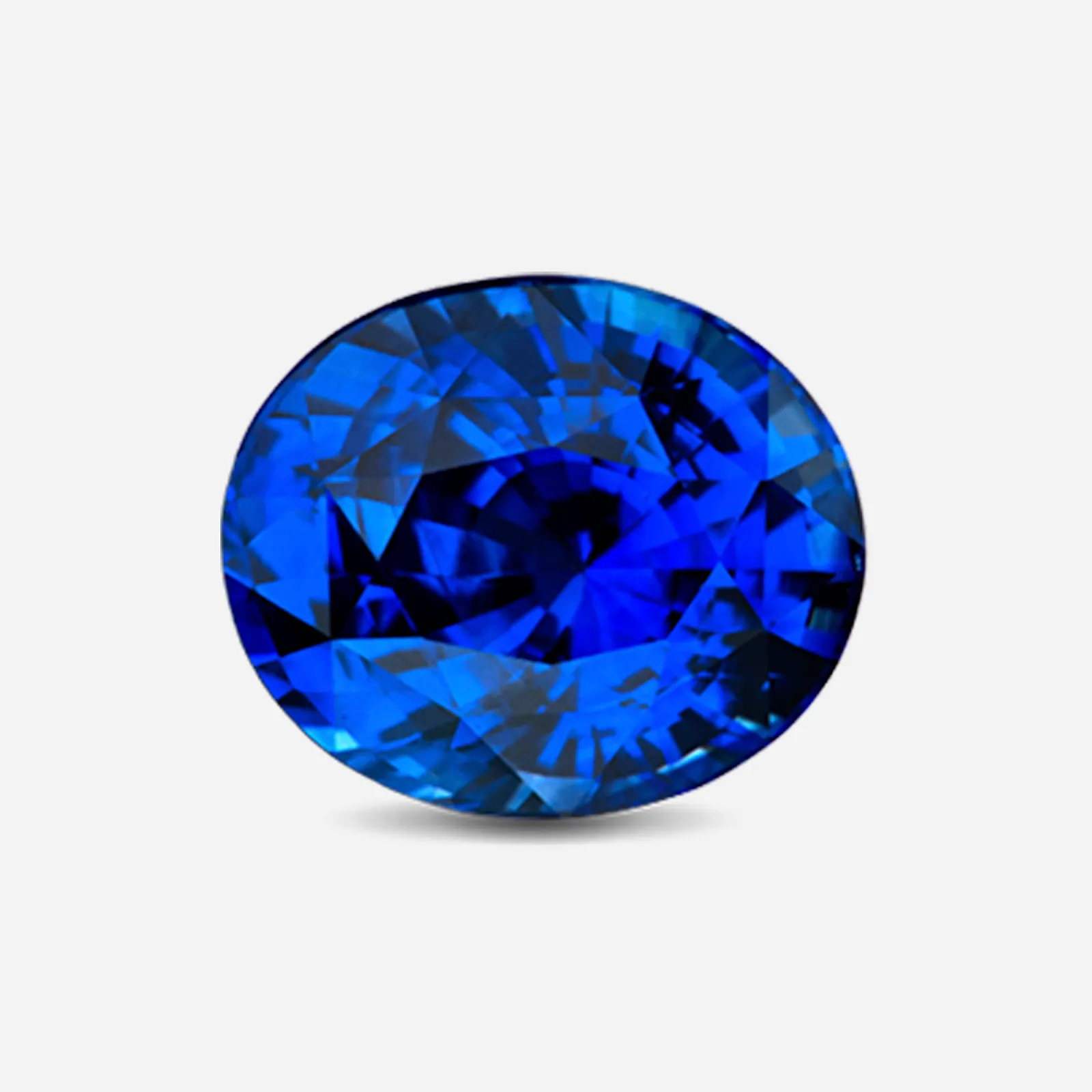
The birthstone for this month is sapphire

Raleigh Diamond Fine Jewelry Raleigh, NC

BIRTHSTONE OVERVIEW


Sapphire, the September birthstone comes in all the colors of the rainbow – except red. Learn more about the birthstone of wisdom, loyalty and nobility and discover its history and where it can be found.

The September birthstone is sapphire – a gem that’s been cherished for thousands of years. Although the term sapphire usually refers to the blue variety of corundum (ruby is the red variety), this birthstone comes in a rainbow of other colors. Sapphires have been long associated with royalty and romance and are also said to symbolize fidelity and the soul. “Sapphire” comes from the Greek word sappheiros and blue sapphire is one of the most popular colored stones. Read on to learn more about the September birthstone, specifically its history and where it can be found.

SAPPHIRE BIRTHSTONE MEANING & HISTORY

The September birthstone has traditionally symbolized sincerity, truth, faithfulness and nobility. For countless centuries, sapphire has adorned royalty and the robes of the clergy. The elite of ancient Greece and Rome believed that blue sapphires protected their owners from harm and envy. Clerics of the Middle Ages wore sapphires because they symbolized Heaven. Ancient Persians believed the earth actually rested on a giant sapphire, which made the sky blue.The September birthstone was reputed to have healing powers as well. Medieval Europeans believed that sapphire cured plague boils and diseases of the eye. The sapphire birthstone was also thought to be an antidote to poison.Famous sapphires include the Rockefeller Sapphire, a 62.02 carat (ct) rectangular step cut stone that was unearthed in Myanmar (Burma). Acquired in 1934 by financier and philanthropist John D. Rockefeller, Jr. (1874–1960) from an Indian maharaja, the gem was recut and remounted over the years. The sapphire was first set as a brooch and later as a ring featuring two cut-cornered triangular diamond side stones. Perhaps the best-known sapphire in recent years is the 12 ct blue gem surrounded by diamonds in the sapphire engagement ring first worn by Princess Diana and then given by her son to Kate Middleton, now Duchess of Cambridge. In addition to being the September birthstone, sapphire is also the gem commemorating the 5th and 45th wedding anniversaries.

WHERE IS SAPPHIRE FOUND?

Kashmir, Myanmar (formerly Burma) and Sri Lanka are three historically important sources for the September birthstone. Significant quantities of the September birthstone have also been found in Australia, Thailand, Cambodia, Madagascar and the United States (Montana), among other countries in Asia and Africa. Sapphires were discovered in Kashmir around 1881 when a landslide high in the Himalayas exposed a large pocket of velvety “cornflower” blue crystals. As the spectacular sapphires began to appear farther south, the Maharaja of Kashmir – and his army – took control of the new locality. From 1882 to 1887, thousands of large, beautiful crystals were recovered. The stones faceted from these crystals established Kashmir sapphire’s reputation as one of the world’s most coveted gems. Production has been sporadic since then, but auction houses occasionally sell fine pieces of Kashmir sapphire jewelry. The Mogok area of Myanmar is another locale famed for producing the September birthstone. Jungle-clad hills hemmed by mountains make a dramatic landscape. Sapphire typically occurs alongside ruby deposits, but in much smaller quantities than its red counterpart. ”Burmese” sapphire, as it is still called by many, can possess a rich, intense blue hue, which has made it particularly prized. Myanmar is also a noted source of jadeite jade, spinel, zircon, amethyst, peridot and other fine gem materials. For more than 2,000 years, Sri Lanka has been a source of the September birthstone. The blue and fancy-color stones mined from the alluvial gravels of this “jewel box of the Indian Ocean” can display remarkable brilliance and saturation. In addition, the island’s milky white “geuda” sapphires can be heat treated to a rich blue color. Thailand is both a source of sapphire and a major cutting and treatment center. In dense jungle crossed by dirt roads, miners dig for sapphire in Chanthaburi Province. Sapphires from Myanmar and Cambodia often end up in Chanthaburi for cutting and treatment and are also sent to Bangkok, an important gem hub.

SAPPHIRE BIRTHSTONE CARE & CLEANING

The September birthstone is relatively hard, ranking 9 on the Mohs scale. It has excellent toughness and no cleavage, which is a tendency to break when struck. This makes it a great choice for rings and other mountings subject to daily wear. Note, though, that sapphires are often treated to improve their color or clarity. Heat treatment is common – and the results permanent – so it is well accepted in the trade. Less common treatments such as lattice diffusion, fracture filling and dyeing may require special care. In some cases, the color induced by lattice diffusion is so shallow it could be removed if the stone was chipped or had to be recut. Fracture-filled and dyed sapphires can be damaged by even mild acids like lemon juice. Before you buy a sapphire, always ask if it is treated and by what method.Warm, soapy water is always a safe choice for cleaning the September birthstone. Ultrasonic and steam cleaners are usually safe for untreated, heat-treated and lattice diffusion–treated stones. Fracture-filled or dyed material should only be cleaned with a damp cloth.

Raleigh Diamond Fine Jewelry
5925 Glenwood Avenue, Suite 100
Raleigh, NC 27612
(919) 725-3444
Store Information
Hours
Mon-Sat:Monday - Saturday:
10:00am - 7:00pm
Sunday:
12:00pm - 6:00pm
Follow Us
MAKE AN APPOINTMENT
Shop Jewelry
  • Engagement Rings
  • Gemstones
  • Wedding Bands
  • Ladies Wedding Bands
  • Fashion Rings
  • Earrings
  • Bracelets
  • Chains
  • Necklaces
  • Charms & Pendants
  • Mens Jewelry
  • Birthstones
  • Cufflinks
  • Watches
  • Designer Jewelry
  • Estate Jewelry
  • Estate Designer Jewelry
  • Accessories
  • Engravable Jewelry
  • Gifts ideas under 500
Our Store
  • About Us
  • Why Choose Raleigh Diamond
  • Store Reviews
  • Charities We Support
  • Meet the Team
  • Contact Us
Customer Service
  • Services
  • Shipping Policy
  • Warranties & Guarantees
  • Lifetime Service & Maintenance
  • Military & Service Discount
  • Return Policy
  • Privacy Policy
  • Terms & Conditions
  • My Account
  • Return Policy
  • Privacy Policy
  • Terms & Conditions
  • Accessibility Statement

© 2026 Raleigh Diamond Fine Jewelry. All Rights Reserved.

Powered by: Punchmark

My Bag
Shopping cart contents
Loading

Learn how we use cookies in our Privacy Policy or manage cookie preferences.