Skip to main contentSkip to footer
  • 110% Diamond Upgrade
  • Low Price Guarantee
  • Lifetime Service & Maintenance
  • Financing & Layaway
  • (919) 725-3444
  • Make an AppointmentWalk-ins Welcome
  • Toggle My Account Menu
    Login
    Forgot Password?

    Don’t have an account? Sign up now

  • Toggle My Wishlist
  • Toggle Shopping Cart Menu
Raleigh Diamond Fine Jewelry logo
  • Engagement Rings
    Build a Ring
    SolitaireHaloThree StoneVintageSide StonePavéChannelMulti RowStart with a SettingStart with a Natural DiamondStart with a Lab Grown Diamond
    In-Stock Rings
    Complete Engagement RingsRing Settings for Your Stone(s)View All Rings
    Custom Engagement Rings
    Diamond Consultations
    Bridal Consultation
    110% Diamond Upgrade
  • Wedding Bands
    Ladies Wedding Bands
    Ladies Diamond Wedding BandsLadies Gold Wedding Bands
    Men's Wedding Bands
    Men's Wedding BandsAlternative Wedding Bands
    Custom Wedding Bands
    Wedding Band Builder
    Menu image
    Menu image
    Menu image
  • Diamonds
    Build Your Ring
    Start with a SettingStart with a Lab Grown DiamondStart with a Natural Diamonds
    Why Choose Us?
    Natural Diamonds
    Round The beloved round diamond, with its 58 dazzling facets, was perfected in 1919 and is now the most popular diamond shape in the world. Its journey began in the 1700s with the 'Old Mine Cut,' which closely resembled a cushion shape. Today, the round brilliant cut is synonymous with everlasting love and timeless sophistication. Princess The princess cut diamond is a modern marvel with roots in the 14th-century French cut. Perfected in the 1960s and skyrocketing in popularity by the 1980s, it's celebrated for its clean, sharp points and ability to use up to 80% of the rough diamond. This cut is bold, contemporary, and effortlessly chic. Emerald The Emerald Cut, also called the 'Step Cut,' is a masterpiece of symmetry and sophistication. Originally crafted for emerald gemstones over 600 years ago, this cut was designed to prevent chipping, making it as practical as it is beautiful. Its elongated, mirror-like facets create a 'hall of mirrors' effect that exudes vintage glamour and modern refinement. Oval The oval diamond's origins date back to the 1300s, but its modern elegance was perfected in 1957 by the renowned Chicago diamond cutter Lazare Kaplan. Known as the 'Oval Brilliant,' this shape delivers a legacy of grace and brilliance, cherished for its ability to elongate and flatter the wearer's hand. Cushion The cushion cut, originally crafted in the late 1700s as the Old Mine Cut, has gracefully evolved into the modern masterpiece we adore today. With its soft, rounded edges and sparkling facets, this shape captures the essence of timeless romance. Its very name evokes the image of a luxurious, glittering pillow, making it a symbol of comfort and enduring beauty. Radiant First crafted in 1977 by Henry Grossbard, the Radiant cut is a marvel of brilliance with its 70 intricate facets. Designed to maximize sparkle while concealing imperfections, this shape is as practical as it is breathtaking. The Radiant cut is perfect for those who seek brilliance with a contemporary edge. Pear Romantically known as the 'Tear Drop,' the pear-shaped diamond combines timeless grace with a touch of individuality. Perfected in 1475 by a Flemish diamond cutter who revolutionized diamond polishing, this iconic shape remains a symbol of elegance and precision to this day. Heart As a universal symbol of love, the heart-shaped diamond has been cherished since 1463. Mary Queen of Scots famously gifted a heart-shaped diamond ring to Queen Elizabeth I, solidifying its place in history. A heart-shaped diamond is the ultimate expression of romance, passion, and devotion. Marquise Fit for royalty, the Marquise cut was commissioned by King Louis XV to mimic the shape of his lover's lips. With its elongated, pointed silhouette, this shape exudes romance and opulence. Popularized again in modern times by celebrities like Selena Gomez, the Marquise cut is a true conversation starter. Asscher Created in 1902 by Joseph Asscher, the Asscher cut is a work of art with its distinctive X-shaped pattern and step cuts. Often called the 'Hall of Mirrors,' it captures light in mesmerizing ways. Made famous by Elizabeth Taylor's dazzling Asscher-cut diamond from Richard Burton, this shape is a symbol of classic Hollywood glamour.
    Lab Grown Diamonds
    Round The beloved round diamond, with its 58 dazzling facets, was perfected in 1919 and is now the most popular diamond shape in the world. Its journey began in the 1700s with the 'Old Mine Cut,' which closely resembled a cushion shape. Today, the round brilliant cut is synonymous with everlasting love and timeless sophistication. Princess The princess cut diamond is a modern marvel with roots in the 14th-century French cut. Perfected in the 1960s and skyrocketing in popularity by the 1980s, it's celebrated for its clean, sharp points and ability to use up to 80% of the rough diamond. This cut is bold, contemporary, and effortlessly chic. Emerald The Emerald Cut, also called the 'Step Cut,' is a masterpiece of symmetry and sophistication. Originally crafted for emerald gemstones over 600 years ago, this cut was designed to prevent chipping, making it as practical as it is beautiful. Its elongated, mirror-like facets create a 'hall of mirrors' effect that exudes vintage glamour and modern refinement. Oval The oval diamond's origins date back to the 1300s, but its modern elegance was perfected in 1957 by the renowned Chicago diamond cutter Lazare Kaplan. Known as the 'Oval Brilliant,' this shape delivers a legacy of grace and brilliance, cherished for its ability to elongate and flatter the wearer's hand. Cushion The cushion cut, originally crafted in the late 1700s as the Old Mine Cut, has gracefully evolved into the modern masterpiece we adore today. With its soft, rounded edges and sparkling facets, this shape captures the essence of timeless romance. Its very name evokes the image of a luxurious, glittering pillow, making it a symbol of comfort and enduring beauty. Radiant First crafted in 1977 by Henry Grossbard, the Radiant cut is a marvel of brilliance with its 70 intricate facets. Designed to maximize sparkle while concealing imperfections, this shape is as practical as it is breathtaking. The Radiant cut is perfect for those who seek brilliance with a contemporary edge. Pear Romantically known as the 'Tear Drop,' the pear-shaped diamond combines timeless grace with a touch of individuality. Perfected in 1475 by a Flemish diamond cutter who revolutionized diamond polishing, this iconic shape remains a symbol of elegance and precision to this day. Heart As a universal symbol of love, the heart-shaped diamond has been cherished since 1463. Mary Queen of Scots famously gifted a heart-shaped diamond ring to Queen Elizabeth I, solidifying its place in history. A heart-shaped diamond is the ultimate expression of romance, passion, and devotion. Marquise Fit for royalty, the Marquise cut was commissioned by King Louis XV to mimic the shape of his lover's lips. With its elongated, pointed silhouette, this shape exudes romance and opulence. Popularized again in modern times by celebrities like Selena Gomez, the Marquise cut is a true conversation starter. Asscher Created in 1902 by Joseph Asscher, the Asscher cut is a work of art with its distinctive X-shaped pattern and step cuts. Often called the 'Hall of Mirrors,' it captures light in mesmerizing ways. Made famous by Elizabeth Taylor's dazzling Asscher-cut diamond from Richard Burton, this shape is a symbol of classic Hollywood glamour.
    Menu image
  • Fine Jewelry
    New Arrivals
    Jewelry by Category
    Engagement RingsSemi-MountsWedding BandsEarringsNecklacesChainsFashion RingsBraceletsCharms & PendantsMen's JewelryEstate JewelryEngravable Jewelry
    Must Have Styles
    StudsHoopsStatement EarringsDrop & Dangle EarringsTennis BraceletsBangle BraceletsChain Bracelets
    Diamond Jewelry
    RingsEarringsNecklacesCharms & PendantsBracelets
    Colored Stone Jewelry
    BirthstonesEarringsNecklacesFashion RingsBraceletsCharms & PendantsPearls
    Gold Jewelry
    EarringsNecklacesFashion RingsBraceletsCharms & Pendants
    Silver Jewelry
    EarringsNecklacesFashion RingsBraceletsCharms & Pendants
    Watches
    Watches & BraceletsPre-Owned Designer Timepieces
    Your Also May Be Interested In
    Jewelry Boxes & AccessoriesCufflinksGift Ideas Under $500
    Menu image
  • Designers
    Engagement Rings
    Ever & EverGabriel & Co.JewelexRaleigh DiamondS. Kashi & SonsStullerTiffany & Co. Estate
    Wedding Bands
    BenchmarkGabriel & Co.S. Kashi & SonsStuller
    Fashion Jewelry
    JewelexAnia HaieAurelie GiGabriel & Co.Heera MotiImperial PearlsStuller
    Estate Designers
    CartierDavid YurmanJohn HardyRolexTiffany & Co.Van Cleef & Arpels
    Menu image
    Menu image
  • Financing
  • Education
  • About Us
    About Us
    Why Choose Raleigh DiamondMeet the TeamStore ReviewsCharities We Support
    Contact Us
    Schedule an AppointmentSend Us a Message
    Follow Us
    On Social MediaView Our Blog
    Menu image
  • 110% Diamond Upgrade
  • Low Price Guarantee
  • Lifetime Service & Maintenance
  • Financing & Layaway
Raleigh Diamond Fine Jewelry logo
Log In My Cart

FEBRUARY

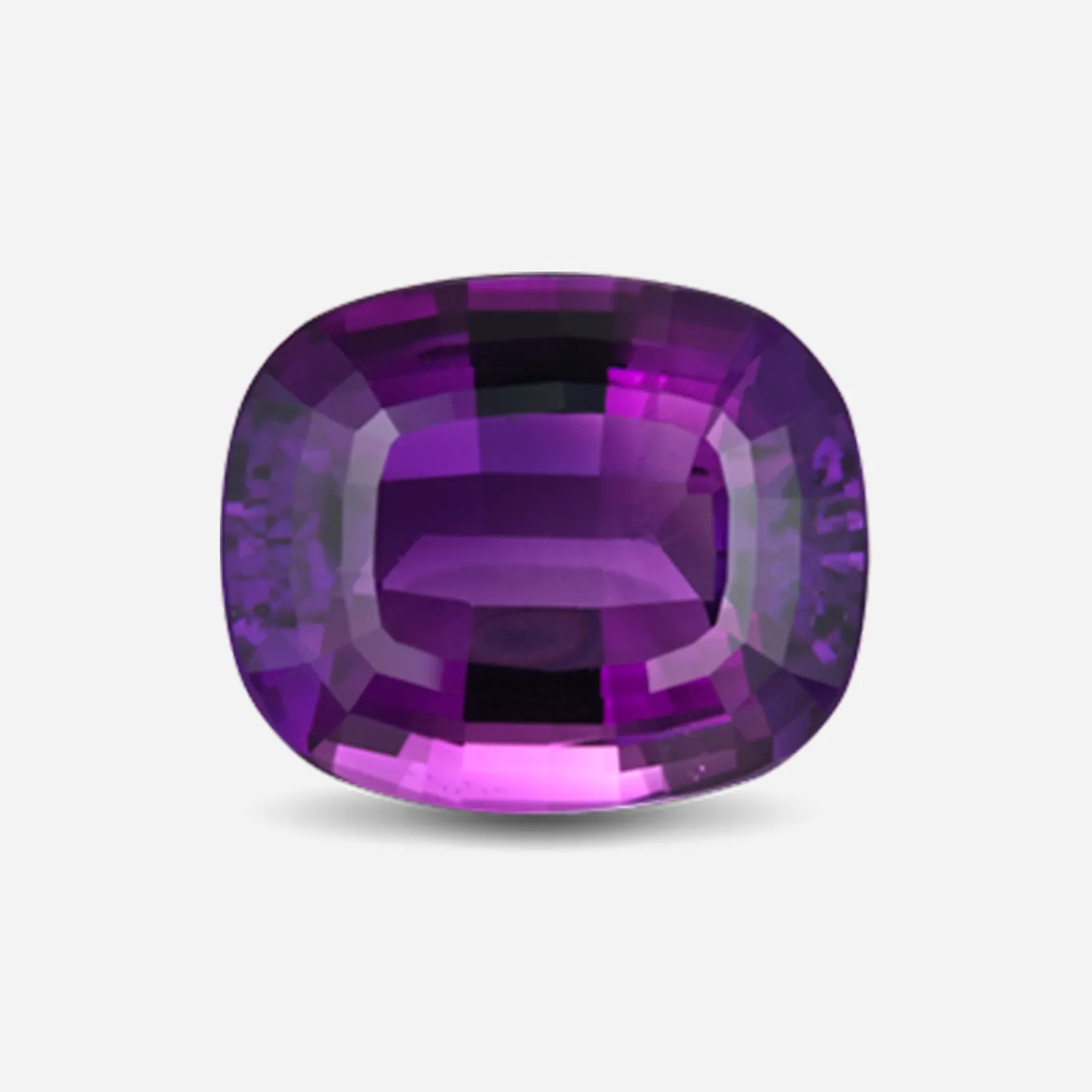
The birthstone for this month is amethyst

Raleigh Diamond Fine Jewelry Raleigh, NC

BIRTHSTONE OVERVIEW


Amethyst, the February birthstone, is the purple variety of quartz and is said to cure drunkenness and make you quick-witted in business. You once had to be rich to own this birthstone for February, but new finds have made it more affordable. Learn more about this stunning birthstone and where it can be found.

If you were born in February, your birthstone is amethyst – the purple variety of quartz that has captivated mankind for millennia. Its lilac to deep purple hues can be cut into many shapes and sizes, and it can be manufactured in a lab as well as mined. Amethyst, the February birthstone, can be found in the collections of royal families throughout Europe and Asia. Now it’s within reach of most consumers. Consider buying a stunning amethyst for the king or queen of your heart – or treat yourself to a royal present. If your birthday is in February, then wearing an amethyst can also be a symbol of personal empowerment and inner strength.

AMETHYST BIRTHSTONE MEANING & HISTORY

The name “amethyst” derives from the Greek amethystos, which means “a remedy against drunkenness,” a benefit long ascribed to the purple birthstone. Because of its wine-like color, early Greek mythology associated the gem with Bacchus, the god of wine. Amethyst was also believed to keep the wearer clear headed and quick witted in battle and business affairs. Renaissance Europeans thought it calmed lovers overrun by passion.  Amethyst is the gem traditionally given for the sixth wedding anniversary. Wear it in celebration of your wedding nuptials or as your February birthstone and you’ll be in royal company: Catherine the Great (Empress Catherine II of Russia, 1729–1796) had a penchant for the gem and decked herself in amethyst necklaces, earrings and other ornaments. The famous jewelry connoisseur Wallis, Duchess of Windsor (1896–1986), made a memorable statement when she wore a lavish Cartier-designed amethyst bib necklace to a gala in Versailles in 1953.

WHERE IS AMETHYST FOUND?

Russia was the major source of amethyst until the 19th century, when large deposits were found in Brazil. Once as rare as ruby or emerald, amethyst was suddenly in abundance. Today, the most important sources of amethyst are in Africa and South America. Brazil is still a major supplier, especially its southernmost state, Rio Grande do Sul, though the rough amethyst mined there tends to have a lighter color than amethyst found in other countries. Amethyst from Brazil sometimes forms in hollow, crystal-lined geodes so large you can stand in them.The Anahí mine in Bolivia is another prominent source for amethyst. Hidden in the Pantanal wetlands, the Anahí mine is shrouded in fascinating lore. It was discovered by a Spanish conquistador in the 1600s, given to him as dowry when he married Anahí (a princess from the Ayoreo tribe), forgotten for three centuries, and rediscovered in the 1960s. The Anahí mine is also famous in gem circles as the source of the unusual bicolored amethyst-citrine crystals called ametrine. In Africa, Zambia’s Kariba mine is one of the largest amethyst producers in the world. Amethyst mined there tends to be of superb quality with richly saturated colors. Amethyst is also found in the United States, just 46 miles (74 km) outside of Phoenix, Arizona. The Four Peaks amethyst mine is located high in the most rugged part of the Mazatzal Mountains. A remote location, hot summer temperatures, and a lack of water and power at the mine make for challenging conditions. Yet this jagged, arid, rattlesnake-infested terrain produces some very fine dark purple and purplish red amethyst crystals.

AMETHYST BIRTHSTONE CARE & CLEANING

Amethyst is a 7 on the Mohs scale of hardness. This means that it is appropriate for daily use in rings and other jewelry, but over time it may show wear and require repolishing. Because this February birthstone is more susceptible to damage than harder gems such as rubies, sapphires and diamonds, you risk scratching your amethyst jewelry if you place it next to these harder stones... Heat treatment is the most common technique for improving the color and marketability of natural amethyst. Heat treatment can’t make pale amethyst darker, but it can lighten the color of very dark amethyst and make it more attractive. It can also remove unwanted brownish inclusions in some amethysts. Some amethyst turns yellow – to citrine – with heat treatment.Heat treating amethyst results in a permanent change in color. However, submitting it to intense heat may render it slightly more brittle than usual, and care must be taken not to damage pointed faceted corners and sharp edges. Note, too, that excessive heat can remove the color entirely, and some amethyst fades with prolonged exposure to strong light. Though the color is stable with normal use, this is not a birthstone to wear to the beach every day.Amethyst birthstone jewelry can be cleaned with an ultrasonic cleaner, but steam cleaning is not recommended. A soft brush with mild soap is the safest option.As you shop for the February birthstone, you’ll also encounter lab-created amethyst. Having the same chemical and physical properties as its natural counterpart, synthetic amethyst has been known since the 1970s. In some cases, it is very difficult to distinguish natural from synthetic amethyst without access to advanced gemological testing. The GIA Laboratory can tell the difference, but many in the jewelry industry do not request testing because of the cost and time required to determine the origin of what is a comparatively inexpensive gem. Still, merchants are required to tell you if a gem is natural or synthetic.

Raleigh Diamond Fine Jewelry
5925 Glenwood Avenue, Suite 100
Raleigh, NC 27612
(919) 725-3444
Store Information
Hours
Mon-Sat:Monday - Saturday:
10:00am - 7:00pm
Sunday:
12:00pm - 6:00pm
Follow Us
MAKE AN APPOINTMENT
Shop Jewelry
  • Engagement Rings
  • Gemstones
  • Wedding Bands
  • Ladies Wedding Bands
  • Fashion Rings
  • Earrings
  • Bracelets
  • Chains
  • Necklaces
  • Charms & Pendants
  • Mens Jewelry
  • Birthstones
  • Cufflinks
  • Watches
  • Designer Jewelry
  • Estate Jewelry
  • Estate Designer Jewelry
  • Accessories
  • Engravable Jewelry
  • Gifts ideas under 500
Our Store
  • About Us
  • Why Choose Raleigh Diamond
  • Store Reviews
  • Charities We Support
  • Meet the Team
  • Contact Us
Customer Service
  • Services
  • Shipping Policy
  • Warranties & Guarantees
  • Lifetime Service & Maintenance
  • Military & Service Discount
  • Return Policy
  • Privacy Policy
  • Terms & Conditions
  • My Account
  • Return Policy
  • Privacy Policy
  • Terms & Conditions
  • Accessibility Statement

© 2026 Raleigh Diamond Fine Jewelry. All Rights Reserved.

Powered by: Punchmark

My Bag
Shopping cart contents
Loading

Learn how we use cookies in our Privacy Policy or manage cookie preferences.