WHERE ARE TOPAZ & CITRINE FOUND?
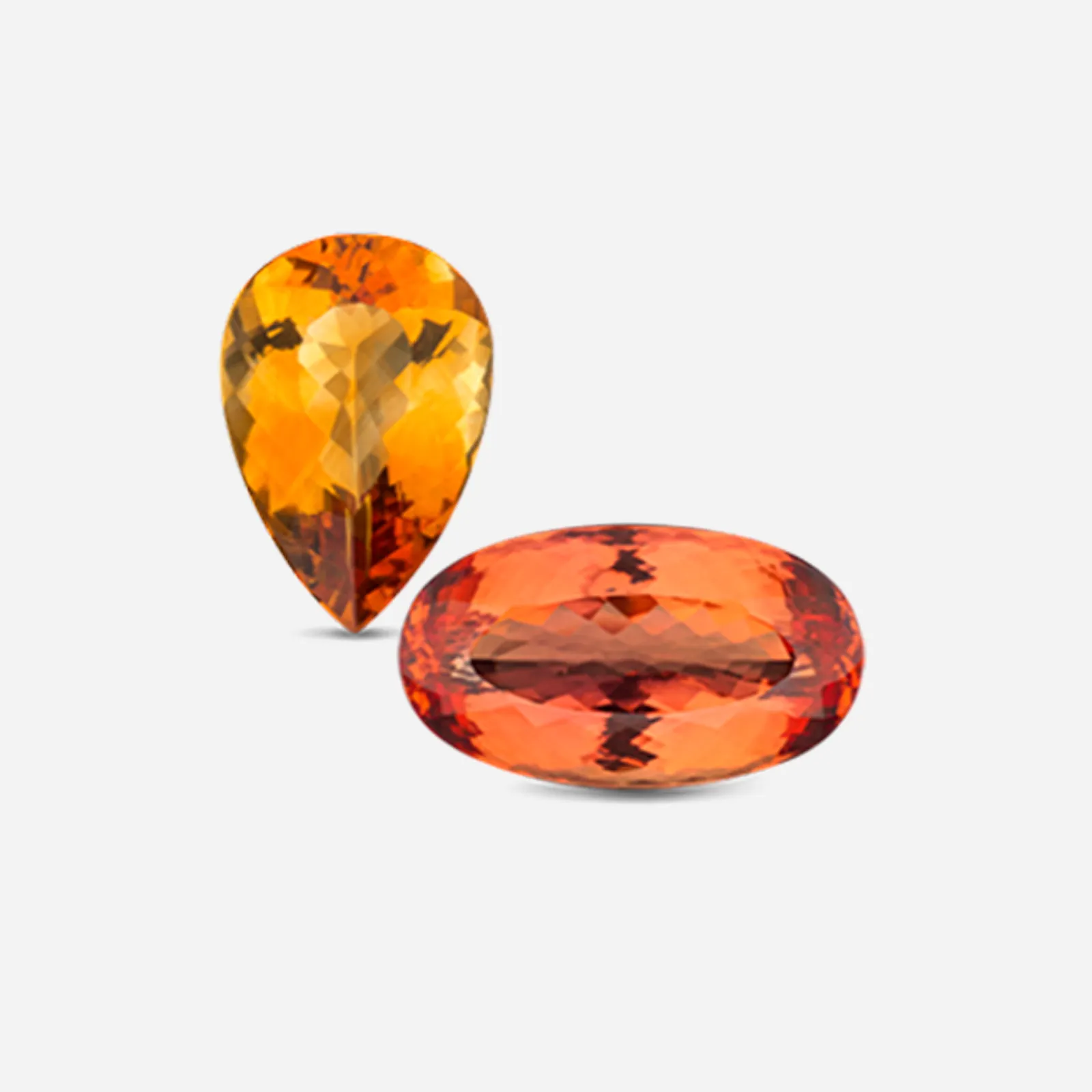
Minas Gerais, a state in Brazil, is one of the most important sources for high-quality Topaz which has been mined there for more than two centuries. Yellow to orange, red, pink, violet and blends of red with orange or purple are some of the colors unearthed here. The nearby town of Ouro Preto is a fitting companion. In this UNESCO world heritage site, majestic colonial churches checker the skyline and quaint cobblestone streets crisscross the city. Northwestern Pakistan is known for producing pink topaz. Ghundao Hill, close to the small town of Katlang, has been mined since 1972. The most sought-after shade of pink topaz from Katlang has a tinge of violet, which some in the gem trade call cyclamen pink. But even at Ghundao Hill, only rarely is this fine pink November birthstone found. Today, other major sources of this November birthstone include Namibia, Nigeria, Madagascar, Mexico, Myanmar, Sri Lanka and the United States, as well as the historic Russian localities.
The top sources for Citrine are Bolivia, Spain, Madagascar, Mexico and Uruguay. Amethyst that’s typically heat treated to a citrine color is mined mostly in Brazil. Deep in the world’s largest freshwater wetland lies Bolivia’s Anahí mine, an important source for natural, unheated citrine. Fields of wildflowers, brightly plumed birds, kaleidoscopes of butterflies, Howler monkeys and jaguars are some of the actors on this vast stage. The story of the mine is worthy of the setting. Discovered by a Spanish conquistador in the 1600s, it was given to him as dowry when he married Anahí, a princess from the Ayoreos tribe of Paraguay. The mine was lost for three centuries until it was rediscovered in the 1960s. The Anahí mine produces a unique combination of amethyst and citrine in the same crystal; when the two colors appear together in a fashioned gem, it is known as ametrine. The citrine birthstones produced at the Anahí mine typically range from orange-yellow to brownish/greenish yellow.